
Industry Insights
Massachusetts Is Betting That Robotics and AI Will Drive Its Next Economy
Massachusetts has long been one of America's leading centers for robotics, artificial intelligence, and advanced manufacturing. Now, state lawmakers are signaling they intend to keep it that way.
The Massachusetts House recently approved an economic development bond bill that includes hundreds of millions of dollars in proposed investments supporting AI, robotics, advanced manufacturing, defense innovation, and university research. While the legislation must still be considered by the Senate and signed by the governor before becoming law, the proposal offers an important look at how states are increasingly viewing automation as a cornerstone of economic competitiveness.
For the robotics industry, the message is straightforward: economic development policy is becoming automation policy.
A Global Robotics Hub
Massachusetts already possesses one of the world's most concentrated robotics ecosystems. The Commonwealth is home to more than 500 robotics companies and organizations, over 35 robotics research programs across 18 universities, and more than 75 colleges and universities helping develop the next generation of automation talent.
The state is also home to MassRobotics, one of the world's premier robotics startup accelerators, which has helped launch dozens of robotics companies and serves as a gateway for international firms entering the U.S. market.
Rather than attempting to build a robotics ecosystem from scratch, the proposed legislation seeks to accelerate one that is already firmly established.
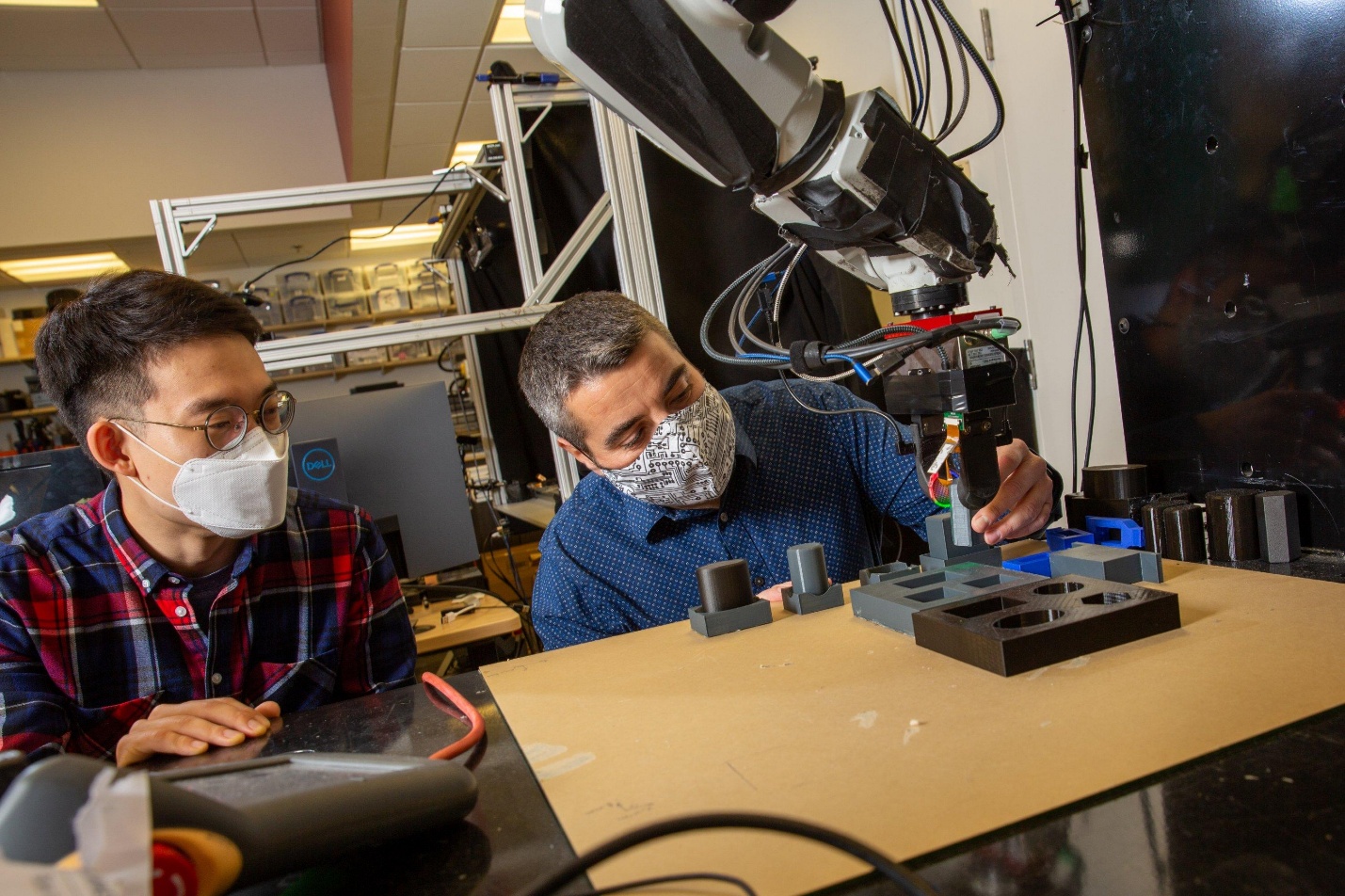
.jpg "person interacting with a robot arm")
A Broad Investment Across the Innovation Ecosystem
Rather than focusing on a single technology or industry, the House proposal spreads investment across the entire innovation pipeline — from research and commercialization to workforce development and deployment.
Among the robotics-related provisions are:
| INITIATIVE PROPOSED | INVESTMENT |
| ARTIFICIAL INTELLIGENCE DEVELOPMENT & DEPLOYMENT | $75 million |
| DEFENSE INNOVATION (INCLUDING ROBOTICS AND AUTONOMOUS SYSTEMS) | $100 million |
| UNIVERSITY RESEARCH BRIDGE FUNDING | $200 million |
| MASSTECH ROBOTICS INITIATIVE | $25 million |
| MANUFACTURING FACILITY EXPANSION | $25 million |
The legislation also builds upon Massachusetts' existing commitment to robotics through its Robotics Grant Program, which already includes long-term capital funding to support robotics research, commercialization, and workforce development.
Taken together, these investments recognize that leadership in robotics requires more than supporting startups. It depends on maintaining a healthy ecosystem that includes universities, manufacturers, defense contractors, workforce programs, investors, and technology commercialization.
States Are Becoming Active Players in Robotics Strategy
Federal initiatives often receive the most attention, but states increasingly play a decisive role in determining where robotics companies choose to locate, expand, and hire.
Research grants, tax incentives, workforce development programs, testing infrastructure, university partnerships, and economic development funding all influence whether emerging technologies remain local successes or grow into global industries.
Massachusetts is not alone. States including Texas, Ohio, Michigan, Arizona, Tennessee, and North Carolina have all launched aggressive strategies to attract advanced manufacturing, semiconductor fabrication, AI infrastructure, and autonomous systems investment. Rather than competing on low operating costs, Massachusetts is doubling down on its traditional strengths: research, engineering talent, commercialization, and innovation.
The result is a new form of interstate competition where policy can be just as important as technology.
Why This Matters for the Automation Industry
For robotics companies, legislation like this is about far more than government funding.
Public investment can accelerate commercialization, reduce barriers for pilot deployments, strengthen regional supply chains, and help address one of the industry's most persistent challenges: access to skilled workers. The proposed university funding also highlights another important trend.
Many robotics breakthroughs begin in academic laboratories before moving into startups, established manufacturers, or defense applications. Sustaining that research pipeline is essential if the United States hopes to remain globally competitive in automation.
Likewise, identifying robotics alongside AI, cybersecurity, semiconductors, and advanced manufacturing reflects a growing recognition that these technologies no longer develop independently. Future competitiveness will depend on integrated technology ecosystems rather than isolated sectors.
That trend aligns closely with what A3 members are seeing across the market. Demand for automation continues to expand beyond traditional manufacturing into healthcare, logistics, defense, life sciences, construction, and critical infrastructure. States that build innovation ecosystems supporting those industries will likely be better positioned to attract both investment and talent.
.jpg "Boston Dynamic center")
Massachusetts Is Investing in Clusters, Not Companies
Perhaps the most significant aspect of the legislation is what it doesn't do. The Commonwealth is not attempting to pick individual corporate winners. Instead, it is investing in the ingredients that produce long-term innovation:
- World-class research universities
- Robotics commercialization
- AI development
- Workforce training
- Defense partnerships
- Manufacturing capacity
- Technology infrastructure
This cluster-based approach has historically proven more durable than incentive packages aimed at attracting a single company. Strong innovation ecosystems create networks of startups, suppliers, investors, manufacturers, researchers, and customers that reinforce one another over time.
It's also increasingly how governments around the world are approaching robotics competitiveness.
The Policy Conversation Is Expanding
The Massachusetts proposal illustrates how discussions around robotics policy are evolving. Just a few years ago, state legislation involving robots often focused on narrow issues such as delivery robot operations or autonomous vehicle testing. Today, policymakers are asking broader questions:
- How can robotics strengthen economic competitiveness?
- Which industries should receive strategic investment?
- How do we build the workforce needed to support automation?
- How can public funding accelerate commercialization and domestic manufacturing?
- How do states compete globally for AI and robotics investment?
Those questions are becoming central to economic development strategies across the country.
Looking Ahead
The House bill is only one step in the legislative process. The Massachusetts Senate is expected to develop its own economic development package before negotiations begin on a final version. Regardless of the final funding levels, the proposal demonstrates an important shift in how states view robotics.
Automation is no longer seen solely as a manufacturing technology. It is increasingly viewed as critical infrastructure for economic growth, national security, healthcare innovation, logistics, and workforce competitiveness.
As more states develop their own AI and robotics strategies, companies across the automation industry will have growing opportunities to engage with policymakers, shape innovation ecosystems, and help ensure that future investments support both technological advancement and broad-based economic growth.
For the robotics community, Massachusetts offers another reminder that the future of automation will be shaped not only by engineering breakthroughs, but also by the public policies that determine where innovation can thrive.
Association for Advancing Automation
Discover how Association for Advancing Automation can support your automation journey with their complete range of solutions and expertise.
Visit Company Website


Industrial Switches Combat Security Dangers in Industrial Artificial Intelligence Systems
Antaira's industrial switches are the ideal security measure for helping keep an industrial network secure
SACMI Partners with KEBA for multi-robot automation packaging lines
SACMI success story: Increases production by +15% with packaging lines exceeding 30 robots.

Weekly Bot Brief Newsletter on Robotics 1/17/2020
The bots have done well in the first two weeks of the new decade.