
Industry Insights
How Anki and Waymo Built a Foundation for Bedrock Robotics
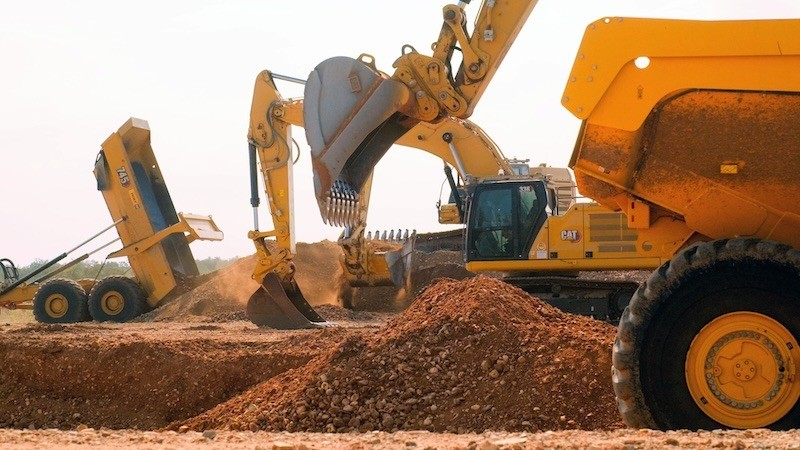
There’s an alternate version of Boris Sofman’s career that plays out differently. In this timeline, the CMU robotics PhD gets more heavily involved in the day’s DARPA challenge and — like many of his classmates — finds himself immersed in the early days of self-driving startups immediately out of school.
Most timelines lead there eventually. In ours, Sofman would ultimately spend just shy of five years at Waymo, the last three and a half of which he served as the Alphabet subsidiary’s senior director of engineering, head of trucking. In March 2024, he and a handful of others exited the company to form Bedrock Robotics, applying many of their learnings to the world of heavy construction machinery.
What makes Sofman’s career fascinating, however, is the road it took along the way. There was an internship at iRobot before the internship at Neato Robotics that first brought him out to the San Francisco Bay Area. The latter also evolved into a four-year role at the robotic vacuum firm, leveraging the sorts of autonomy and path planning concepts that formed the foundation of his thesis.
In early 2010, Sofman and fellow CMU Robotics PhD candidates took a crack at a field at consumer robotics, a field that was (and remains) even more treacherous than self-driving in certain respects.
“We had a pretty good thesis in that we were seeing smartphones come out and start to really scale,” Sofman tells me. “Android and iPhone started ramping into the hundreds of millions of units, which drove down the cost of every single component that they had. So microcontrollers, memory, cameras, motors, wireless chips. These are all the building blocks of consumer products. We had the realization that, if you're smart, these prices are dropping 10x off of what they normally were, and you can start to do things that were not cost competitive previously. On top of that, you can start to use smartphones as the brain and interface to the physical world. We had that insight like really early on.”
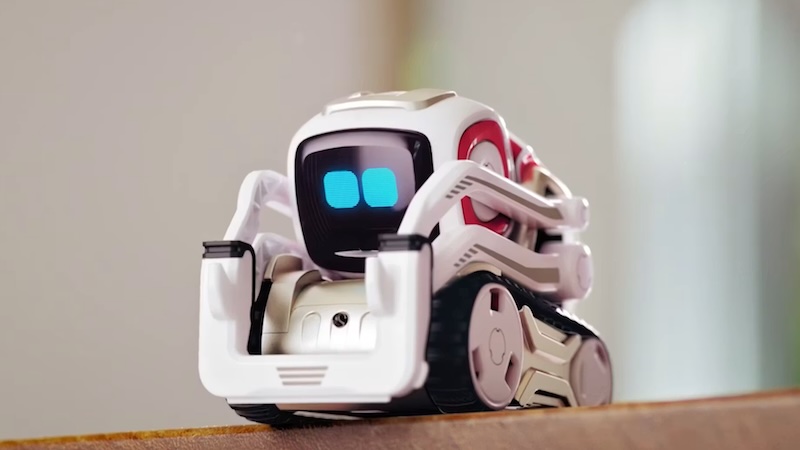
Anki made its first mark with Drive. The iPhone-controlled cars earned the then-unknown startup a coveted spot in Apple’s 2013 WWDC keynote. A new version, Overdrive, and a Fast & Furious-branded version would follow. It’s 2016’s Cozmo, however, for which the company would best be remembered. The desktop robot was a bid to push the state of the art of consumer robotics and AI, packaged at under $200. Remarkably, the whole thing seemed to be working.

June 23-24, 2026 | McCormick Place
The 2026 Humanoid Robot Forum is happening at Automate in Chicago!
Join industry leaders exploring the technologies, safety, and real-world potential shaping humanoid robotics.
“We sold millions of units,” says Sofman. “This was not small. The first year we launched, it ran out of stock so aggressively that we were the number one product on eBay — all of eBay — that holiday of 2016.”
For me, Cozmo’s lasting legacy (beyond having a permanent spot in the backdrop of the Automated Podcast home studio) is Anki’s decision to hire animators from Pixar and Dreamworks to bring the little robot’s facial expressions to life. It felt like a strange indulgence when I met with the company’s founders back in 2016, but it’s a path that plenty have since taken, including Amazon’s Astro and Fauna Robotics’ Sprout (now also Amazon’s Sprout, I suppose). I have to assume that any potential Apple home robot will play a role in keeping the roof over a few animators’ heads, as well.
Ultimately, the toy industry’s intricacies made it impossible for Anki to remain on top a few years after launching Cozmo (and follow up robot, Vector). Failure to secure a funding runway led to the company’s 2019 closure.
“We ended up getting pretty great traction,” says Sofman. “But when I look at the technology today, I could argue that we might have been early in a sense that some of the things that we were really pushing on — especially towards the later years —— were more interactive. Intelligent kind of characters started to like broaden our appeal and start to introduce function, moving into kind of like more broad use in indoor environments. That would be a completely different type of opportunity and challenge with today's technology than 10 years ago.”
Sofman adds that issues specific to the toy industry, including its extreme seasonality also played a role. Ultimately, however, Anki was a valuable learning experience — and one that didn’t dissuade him from launching another––––lbeit very different – startup five years later.
“A lot of those lessons, combined with the Waymo lessons are actually ones that we carried forward into bedrock robotics today,” he says.
Association for Advancing Automation
Discover how Association for Advancing Automation can support your automation journey with their complete range of solutions and expertise.
Visit Company Website


Foundational Learning: Bedrock Robotics is Building Something Big
Flush with new funds, Bedrock is making old construction machines new again.
Ex-Waymo Engineers Raise $80M for Autonomous Construction Machinery
Bedrock Robotics brings autonomy to existing heavy construction equipment.